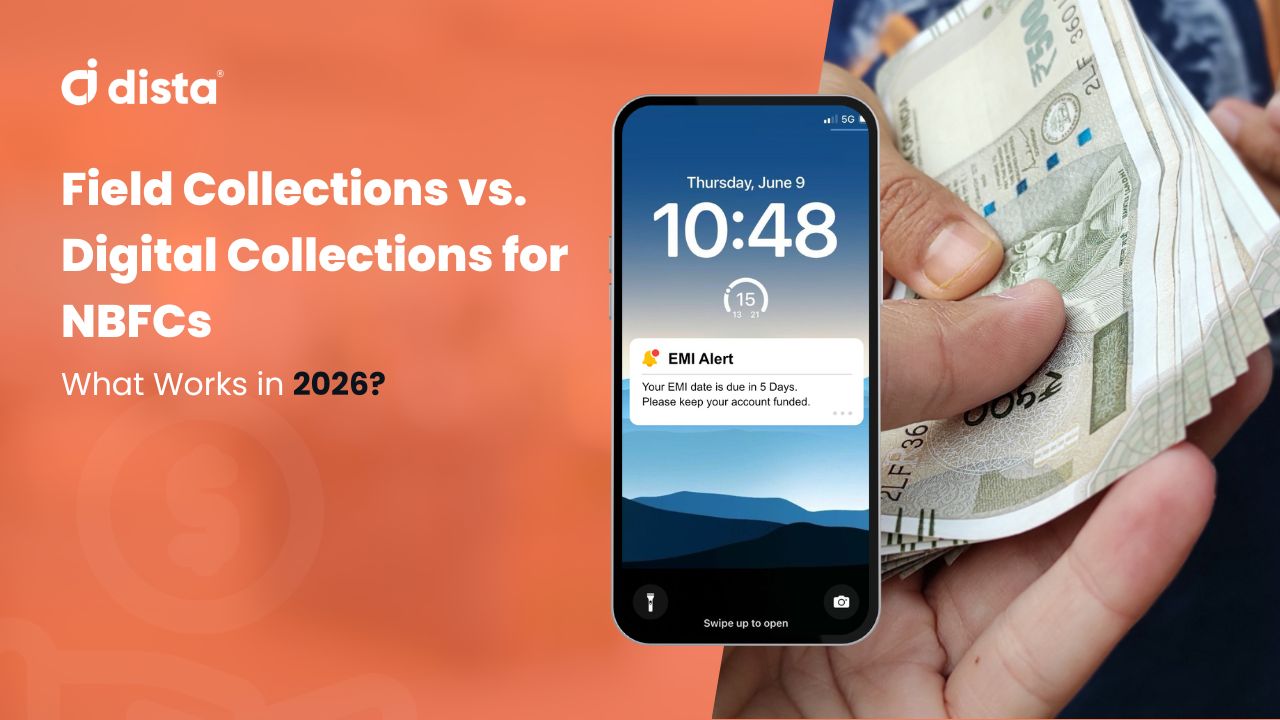
Field Collections vs. Digital Collections for NBFCs: What Works in 2026?

Collections in NBFCs and MFIs have long been done the traditional way. The process involves borrower relationships, informal segment dynamics, and late-stage delinquencies that demand judgment and physical presence. The bird’s-eye view assumes all of it to be entirely human-centric — until it is not.

A significant portion of collections effort goes toward tasks that are manual by habit, not by necessity: case prioritization, early-stage outreach, interaction records, payment capture, and compliance documentation. Digitizing these operations means faster, more efficient recoveries.

The real competitive moat for an NBFC is knowing where to deploy digital collection channels and when to engage in field collection efforts — this blog covers exactly that.

Also Read: Reinventing Field Debt Collections with a Unified CRM

The Ground Reality of Collections in NBFCs and MFIs

Collections in MFIs and NBFCs is structurally different from how banks and fintechs operate. Bank borrowers are salaried, urban, and digitally active, so they are able to act upon auto-debit, UPI reminders, and app notifications. NBFCs and MFIs serve a different borrower profile entirely:

  • Self-employed individuals, rural women in JLG cycles, and small traders with irregular, cash-based income
  • Borrowers who may have a phone, but are in inconsistent internet access zones, or distrust digital payment links
  • Geographies where imprecise addresses make GPS-based routing unreliable without a field agent who knows the area
  • Group repayment models where borrowers repay together at a fixed location each week
  • Repayment behavior shaped by the borrower’s relationship with the field agent, not a bureau score or automated nudge


The gap in the way of functioning persists for technological reasons too. Banks have operated under stringent RBI technology requirements for decades, forcing early infrastructure investment. For NBFCs and MFIs, the business case is harder to build:

  • Small-ticket, high-volume portfolios make large technology spends difficult to justify
  • Technical capacity to implement and maintain complex platforms is limited in Tier-3 and Tier-4 operations
  • Regulatory pressure to digitize is recent — the infrastructure gap is still being closed
  • Cash-dominant repayment at center meetings cannot be replaced by a digital channel


This is why most NBFCs and MFIs have relied on field collections and manual processes as the operational backbone.

Field Collections in NBFCs and MFIs

Field collections, or door-to-door collections, is the physical deployment of field collection executives (FCEs) for borrower visits, cash recovery, and account resolution. It is the right channel for:

  • Late-stage delinquency
  • Cash-dominant segments
  • Secured asset recovery


The cracks start to show when agents head into the field with an account list but without an optimized route, visit history, or any signal on which borrowers are likely to respond in person versus which need a digital nudge first. Deploying a field agent as the default for every account, regardless of risk profile or days past due (DPD) stage, adds to the cost to collect for lending institutions.

According to ET BFSI, field-intensive collections in India cost ₹0.08–₹0.15 per rupee recovered on standard portfolios, and over ₹0.20 at DPD 90-plus.

Digital Collections in NBFCs and MFIs

Digital collections is the digitization and automation of how, when, and through which channel a borrower is contacted at every delinquency stage. Beyond interactive voice response (IVR) calls and payment links, it:

  • Connects loan management system (LMS) data to contact strategy
  • Routes borrowers through the right intervention by DPD bucket and risk profile
  • Captures every interaction outcome in real time
  • Recommends the next best action — digital or field — based on that outcome


Also Read: The Ultimate Guide to Debt Collections Management Software

Why Phygital — A Mix of Digital and Field Debt Collections - Works for NBFCs

Given the intricacies of collections in NBFCs and MFIs, the question is not which channel, field or digital, is better. It is about building a model that deploys each channel at the right stage, based on borrower context and delinquency profile.

Dista Collect is a location-first unified debt collections CRM designed for banks, NBFCs, and microfinance institutions to manage the end-to-end debt collection lifecycle and boost recovery rates.

Dista Collect, a unified platform, powered by Location Intelligence and Customer 360

The platform runs on two intersecting capabilities:

  • Customer 360: Identifies who the borrower is through their repayment patterns, behavioral risks, and communication preferences
  • Location Intelligence: Enables field orchestration backed by insights on where, when, and how teams engage in the field
 
Step 1: Lead Ingestion and Data Unification

Borrower data like loan details, DPD history, promise-to-pay (PTP) records, and payment mode preferences are pulled directly from the LMS through system integration.

This eliminates manual case entry and information silos between telecalling teams and FCEs before the first contact is made.


Step 2: DPD-Based Case Prioritization

The system segments borrowers by delinquency stage, repayment behavior, and risk profile.

Buckets are created based on business rules that determine whether an account gets automated outreach, enters the telecaller queue, or requires field collections activation.

 
Step 3: Automated Outreach for Early-Stage Accounts

When a borrower’s case enters the LOS, Dista Collect triggers:

  • Context-aware communication via digital channels and Customer 360
  • Location-based agency assignment, so the right agent is already mapped to the account before any escalation is needed
  • Strategy Builder to configure outreach sequences by DPD bucket and repayment pattern
 
Step 4: Telecaller Engagement with Full Context

When the borrower confirms payment, Dista Collect acts instantly without any manual follow-up. The telecaller works from a complete view of the borrower before the call:

  • A 360° customer view covering loan details, PTP history, prior interactions, and contact preferences
  • Secure payment links sent instantly via the borrower’s preferred channel on confirmation
  • Customer 360 updates the CRM automatically — no manual logging
 
Step 5: Verified Handoff to Field

Cases that could not be resolved through digital outreach and require a physical visit are escalated to field collections with complete context — last contact date, PTP status, and prior visit history.

This also helps eliminate duplicate visits on resolved cases.

 
Step 6: Location-Intelligent Field Activation
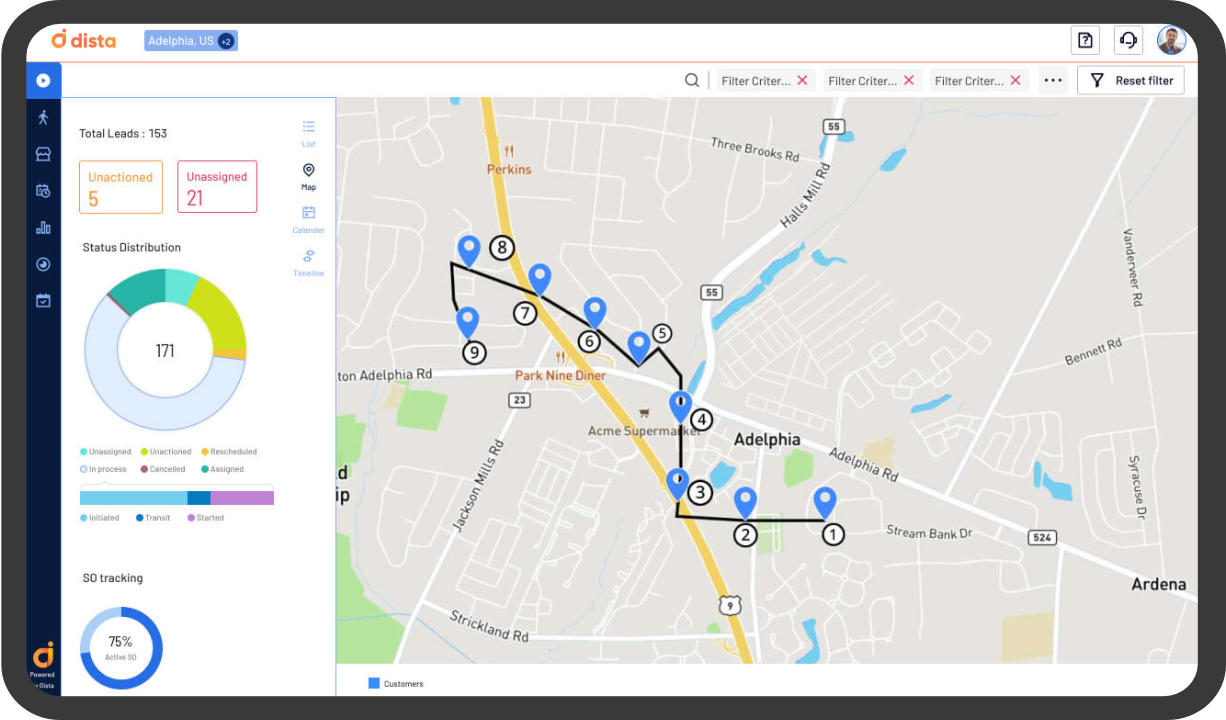
When the borrower misses a second EMI, the case is allocated to an agency and FCE based on 30–60 DPD recovery logic, with an optimized beat plan and Customer 360 in hand. On the ground, this means:

  • Intelligent case allocation to the right agency and FCE based on 30–60 DPD recovery logic
  • Smart beat plans with optimized routes so field executives spend more time with customers
  • Disposition tracking across every interaction
  • Leadership insights and zone-level performance visibility for managers as it happens
  • Hyper-localized clustering to identify delinquency concentration within territories
  • Incentive management to drive field team performance
  • An audit trail and risk compliance at every step

Read More: How Location Intelligence is Transforming NBFC Field Operations

 
Step 7: Settlement, Repossession, and Compliance

When the borrower does not respond to manual or digital follow-ups, the case moves into recovery. Dista Collect manages this end-to-end:

  • Instant digital settlement links issued within business rules
  • Digital consent management and agent-triggered repo initiation
  • Asset geo-tagging, yard coordination, and auction management

Every interaction from pre-due to disposal is part of a secure, compliant trail — featuring geo-tagged visits and disposition logs, number masking, encrypted access, and RBI compliance.

Learn More: Leading NBFC-MFI Strengthens Field Collections with Location-First Intelligence

Results From NBFCs and MFIs Using Dista Collect

  • 87.5% higher agent productivity
  • 25% more true visits
  • 90% collection rate
  • 100% allocation automation

The Future of Recovery: Orchestrating the Phygital Collections Ecosystem

Field collections and digital collections are not competing choices. They serve different borrower profiles at different delinquency stages — and both are necessary.

The NBFCs and MFIs improving recovery rates in 2026 are not choosing between them. They run both on a coordinated system where location intelligence for banking and finance directs field capacity, and a unified debt collections CRM keeps borrower context intact from the first digital nudge to the field agent’s visit.

Book a demo to see how Dista Collect works for your collections operation.