Field force management platforms have evolved from a back-end necessity to a core growth driver. In sectors like BFSI, FMCG, and logistics, companies are moving beyond simple GPS tracking to embrace Field Force Management (FFM) platforms that analyze and optimize every movement.
The data is clear: The global Field Service Management market is projected to reach $8.5 billion by 2029. Organizations utilizing data-backed FFM tools—tracking metrics like first-time fix rates and average travel time—frequently report significant improvements in task completion speeds and customer satisfaction scores.
Watch – http://youtube.com/watch?v=qCvwgpZCcQk
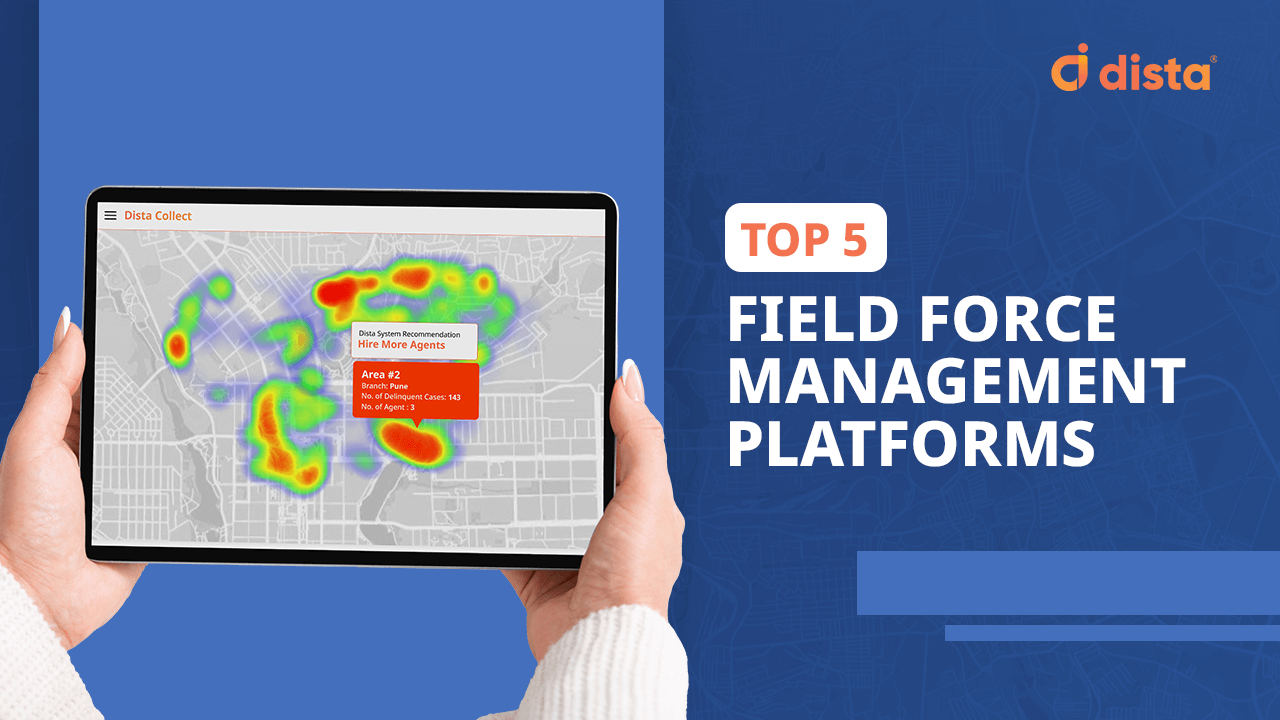
Top 5 Field Force Management Platforms
|
Platform |
Best For |
Core Strength |
|
TrackoField |
Scaling SMEs |
Visibility & Accountability |
|
FieldAssist |
FMCG & Retail |
Secondary Sales & Distribution |
|
SalesDiary |
Large Sales Teams |
Predictive AI & Forecasting |
|
Gofrugal |
Retail/ERP Users |
Automation & Inventory Sync |
|
Dista |
BFSI Enterprises |
Location Intelligence & Orchestration |
1. TrackoField — Visibility for Scaling Teams
TrackoField is designed for businesses seeking a disciplined transition to digital field operations. It provides managers with a centralized dashboard to monitor movement and productivity in real time.
- Live Tracking: Monitor field staff movement and route adherence via a unified map.
- Automated Attendance: Verifies work hours and mileage automatically to streamline payroll.
- Offline Functionality: Ensures data continuity in low-connectivity areas.
Also Read – Top MFI Firm Improves Real-Time Visibility into Loan Officers with Dista
2. FieldAssist — Precision for Retail & FMCG
FieldAssist specializes in retail execution, helping consumer brands digitize on-ground sales and convert field data into demand insights.
-
Retail Digitization: Real-time capture of secondary sales, stock levels, and shelf visibility.
-
Demand Analytics: Identifies high-performing outlets to guide inventory distribution.
-
Route Optimization: Streamlines daily beats to maximize sales rep productivity.
Also Read – How Field Force Management Elevates Customer Experience
3. SalesDiary — Predictive Sales Operations
SalesDiary transitions sales management from reactive to proactive by using AI-driven analytics to forecast market performance.
- Unified Execution: Integrates order management, inventory, and reporting in one flow.
- Predictive Forecasting: Uses historical data to anticipate demand and plan stock.
- Custom Workflows: Adaptable architecture that fits diverse distribution models.
4. Gofrugal — Automation-First Distribution
Gofrugal focuses on removing manual friction from the retail supply chain, ensuring seamless communication between the warehouse and the field.
- Integrated Ecosystem: Bridges the gap between billing, inventory, and field sales.
- Workflow Automation: Reduces manual data entry for order and stock management.
- Omnichannel Alignment: Synchronizes data across distributors, retailers, and field teams.
Also Read – E-Commerce Firm Improves Supply Chain Network with Dista Insight
5. Dista — AI-Driven Enterprise Orchestration
Dista is an advanced platform for large-scale enterprises requiring high precision and location intelligence. It utilizes geospatial data to manage complex field workflows across sales, service, and collections.
- AI-Optimized Scheduling: Automatically assigns tasks based on proximity, skill, and priority.
- Geospatial Intelligence: Enhances territory planning and real-time route optimization.
- Unified Modules: A single platform for diverse field functions (Sales, Service, and Delivery).
- SLA Compliance: Automated monitoring of service level agreements and digital audit trails.
The Hidden Cost of Fragmented Systems
Even high-performing teams hit a ceiling when their tools operate in silos. When CRMs, GPS trackers, and spreadsheets don’t communicate, it creates operational blind spots. For leadership, this results in:
- Delayed Decisions: Manually reconciling fragmented reports takes days, not minutes.
- Limited Accountability: Difficulty in measuring individual performance against business goals.
- Information Silos: Valuable field data stays trapped in local devices instead of informing global strategy.
The Power of Connected Intelligence
Modern leaders are replacing disconnected tools with a unified operational ecosystem. By integrating location intelligence with core business data, organizations achieve:
- A Single Source of Truth: Field, customer, and performance data on one dashboard.
- Proactive Analytics: Identifying inefficiencies before they impact the bottom line.
- Operational Clarity: Turning movement into measurable ROI.