
Sales funnel management is the practice of tracking prospects through each stage of the sales process, identifying where they drop off, and taking action to improve conversion. For the sales funnel to work, every stage needs clear ownership, defined activities, and measurable outcomes.
This guide explains the key stages of a sales funnel, the metrics that help identify conversion gaps, and how sales productivity software can help teams improve visibility, streamline workflows, and manage opportunities across the funnel.
What Is Sales Funnel Management?
A sales funnel describes the stages a prospect passes through before becoming a customer. It is called a ‘funnel’ as each stage retains fewer prospects than the one before it. The funnel is therefore measured in volume and conversion: How many prospects enter each stage and how many move on.

The sales funnel is often confused with two related terms.
- A sales pipeline, which describes the seller’s activity and the deals in progress, while the funnel describes the buyer’s progress.
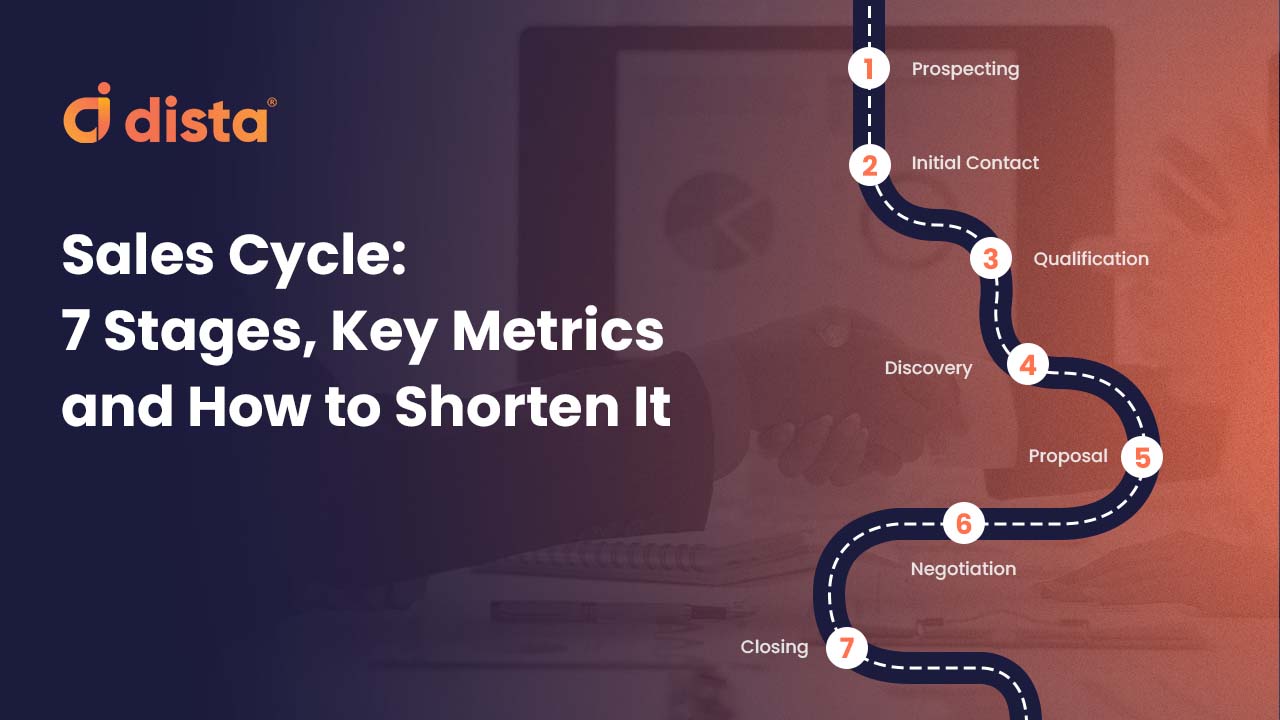
- The sales cycle is the time a deal takes from first contact to close.
The funnel shows where prospects are lost, and the sales cycle shows how long the prospects who convert take.

How the Sales Funnel Works in Lending
Lending adds complications that general funnel models do not cover. Leads come from branches, DSAs, digital channels and field teams at once. Officers often meet customers in person, and the sales team then hands the application to a credit team that works in a separate loan origination system (LOS).
The table below maps the lending funnel and the problem each stage tends to have.
Lending stage | Where the Sales Funnel Breaks Down |
Lead generation and Capture | Leads from branches, DSAs and field teams arrive scattered |
First contact and pre-login follow-up | Slow first response, missed follow-ups |
Eligibility and Qualification | Weak or inconsistent qualification |
Field visit and document collection | Poor territory assignment, unplanned visits, no visibility into field activity |
Login (handoff from sales to LOS) | Leakage at the sales-to-credit handoff |
Funnel Review | Leads stall without anyone seeing where |
Note: Credit appraisal, sanction and disbursal are not part of this sales funnel. They run in the LOS, and the sales funnel ends when the application is logged in.
As leads move through the sales funnel, activities such as customer meetings, field verification, and document collection require coordination between the back office and field officers. Managing these activities efficiently depends on assigning the right officer, planning visits, and maintaining visibility into field operations.
This is where location intelligence plays an important role. By identifying the nearest available officer, optimizing daily visit routes, and mapping field activity across territories, it helps teams manage field-led stages more effectively.
How to Reduce Lead Leakage Across Sales Funnel Stages
Lead leakage occurs when prospects drop out of the sales funnel because of delayed responses, missed follow-ups, unclear qualification criteria, or unresolved process bottlenecks. Not every lost lead is preventable, but identifying where prospects stop progressing helps sales teams address avoidable losses.
For banks, NBFCs, and MFIs, leakage can occur at several points, from the first enquiry to customer verification, document collection, and application login. The following practices help teams identify and reduce these gaps.
1. Define Clear Qualification Criteria for Every Stage
When qualification criteria differ across officers or branches, leads may move forward before they are ready or remain stuck despite meeting the requirements.
Every funnel stage should have defined entry and exit conditions. For example, a lending lead may enter qualification once the customer’s contact details and loan requirement are captured. It should progress only after the necessary eligibility checks are completed.
Depending on the product and stage, these checks may include:
- Income, employment, and eligibility verification
- Digital KYC and required documentation
- Field verification, where applicable
- Risk screening based on predefined business rules
Configurable qualification rules and recorded lead dispositions help teams apply consistent criteria across branches. This reduces unnecessary movement between stages and makes it easier to identify why leads fail to progress.
2. Reduce Delays in First Contact
A prospect who expresses interest but receives no timely response may move to another lender or lose interest before the first conversation.
Lead response time should therefore be monitored from enquiry capture to the first contact attempt, with measurable service-level agreements (SLAs) for different lead sources.
To reduce leakage at this stage, sales teams should:
- Set response-time SLAs for incoming enquiries
- Track leads that remain uncontacted beyond the defined SLA
- Record contact attempts and outcomes
- Escalate unattended leads for timely follow-up
For example, if a customer submits a personal loan enquiry through a website, the team should be able to identify whether the lead was contacted, when the attempt occurred, and what action is required next.
Monitoring SLA breaches by branch and team helps distinguish isolated delays from recurring response problems.
3. Prevent Missed Follow-Ups Between Funnel Stages
Not every prospect converts after the first conversation. Many require additional information, eligibility clarification, document submission, or another discussion before making a decision.
Without a structured follow-up process, interested prospects can remain inactive even when they have not rejected the offer.
Sales teams can reduce this leakage by:
- Assigning a clear next action and follow-up date
- Using automated reminders for pending interactions
- Recording customer responses and reasons for delay
- Tailoring follow-ups to the prospect’s current funnel stage
For example, a customer awaiting loan eligibility confirmation needs a different follow-up from one who has completed verification but has not submitted the required documents.
A Customer 360 view can help officers access previous interactions, pending requirements, and customer preferences. This reduces repeated conversations and makes follow-ups more relevant.
4. Identify and Resolve Leads Stuck in the Funnel
A lead may remain active in the CRM without making meaningful progress through the funnel. These opportunities can accumulate across stages and create an inflated picture of the sales pipeline.
Lead aging helps identify such cases by measuring how long each prospect remains at a particular stage.
Sales teams should monitor:
- Leads exceeding the expected time at each stage
- Opportunities with no recorded next action
- Repeated follow-ups without stage progression
- Leads awaiting customer or internal action
For example, if several business loan prospects complete their initial meetings but remain at document collection for weeks, the issue may be incomplete documentation, delayed verification, or insufficient follow-up.
Reviewing the reason for each delay helps managers decide whether the lead needs intervention, reassignment, or closure with an appropriate disposition.
5. Reduce Leakage During Document Collection and Application Handoffs
In lending, a prospect’s willingness to proceed does not always translate into a completed application.
After initial qualification and customer meetings, delays in document collection, field verification, or application submission can prevent otherwise interested prospects from reaching the credit review stage.
To identify these gaps, teams should track:
- Pending documents and verification requirements
- Planned versus completed customer visits
- Applications awaiting submission or login
- Reasons for incomplete or returned applications
- Delays between sales completion and the credit handoff
For example, a loan applicant may have completed the customer meeting but remains pending because one document has not been collected. Without visibility into that requirement, the application may remain inactive despite the customer’s initial interest.
Integration between sales systems, CRM, and Loan Origination Systems (LOS) can improve visibility into application status and reduce manual follow-ups between teams.
6. Monitor Drop-Off Patterns and Address Their Causes
Lead leakage cannot be reduced consistently without knowing which stages lose the most prospects and why.
Stage-to-stage conversion identifies where prospects stop progressing, while lead aging and disposition data help explain the reasons.

The objective is not simply to increase the number of leads entering the funnel. It is to reduce preventable losses at each stage and improve the proportion of qualified prospects who successfully progress toward conversion.
However, averages at the organization level can hide the real issue. The more useful view is by branch, territory, and team, because a weak conversion rate in one area often points to a local cause such as thin coverage, delayed follow-up, or an overloaded officer.
This level of visibility depends on tools that capture field activity as it happens, rather than reports assembled later from weekly updates.
How Technology Supports BFS Sales Funnel Management
Managing sales funnel activities across branches and field teams requires more than recording leads in a CRM. Technology helps organizations put qualification rules, lead assignments, customer interactions, and field activities into coordinated workflows, with visibility into how opportunities progress.
For banks, NBFCs, and MFIs, sales productivity software such as Dista Sales complements existing CRM and lending systems by supporting field-first sales execution through:
- Configurable qualification workflows: Apply business rules, eligibility criteria, and lead dispositions to support consistent qualification and stage progression.
- Intelligent lead allocation and assignment: Use location intelligence, catchment areas, officer availability, capacity, proximity, and skill sets to assign leads appropriately.
- Field workflow automation: Support daily beat planning, customer visits, field verification, and activity capture to keep field-led sales processes moving.
- Customer 360 and sales enablement: Give officers access to customer interaction history, contextual product information, relevant offers, and cross-sell opportunities.
- Sales performance visibility: Monitor field activities, lead dispositions, sales performance, and operational effectiveness across teams and territories.
- Integration with enterprise systems: Connect field sales activities with existing CRM and LOS platforms to support lead management and application handoffs.
Unlike a traditional CRM that primarily serves as a system of record, Dista Sales focuses on helping field officers act on leads and giving managers visibility into execution. Its integration with the lender’s existing systems connects field activity with the broader sales process without replacing the LOS or its credit approval workflows.
Frequently Asked Questions
What is sales funnel management?
It is the practice of defining the stages of a sales process, tracking prospects through them and acting on the points where prospects stall or leave.
What is the difference between a sales funnel and a sales cycle?
The funnel shows how many prospects reach each stage and where they drop out, so it is measured in volume and conversion. The sales cycle is the time a deal takes from first contact to close, so it is measured in days. A stall at one funnel stage usually lengthens the cycle as well.
Which metrics matter most?
Conversion rate by stage, lead response time and lead aging. Each is more useful when viewed by team, territory or channel than as a single average.
How fast should a team respond to a new lead?
Research points to speed as a strong factor. Harvard Business Review found that contact within an hour made qualification nearly seven times more likely than a response an hour later, and the Lead Response Management Study found the largest effect in the first five minutes. The right standard depends on the product and the sales model.
How does the sales funnel work in lending?
It runs from lead capture through first contact, qualification, customer meeting and document collection, and ends at login, when the application passes to credit. Appraisal, sanction and disbursal sit in the LOS.
How can lenders improve field sales funnel visibility?|
Three things help most: territory allocation so every lead has a clear owner, activity tracking so visits and follow-ups are recorded as they happen, and stage analytics that show where leads age. Dista Sales brings these together for banks, NBFCs and MFIs.
Why do deals stall between teams?
Teams usually work in separate systems, so pending or incomplete files are not visible to the people who could clear them. Tracking stage status up to the handoff makes pendency visible.
Turn Sales Funnel Insights into Outcomes
A sales funnel performs well when its stages are defined, its leads have owners and its metrics are reviewed at the level where problems occur. In lending, where field activity and handoffs between teams add further points of loss, the same discipline applies with more attention to territories, visits and pendency.
To see sales funnel and field performance tracked in one place, explore Dista Sales.